Ball Attachments vs Locator Attachments: Which Retention System Works Better?
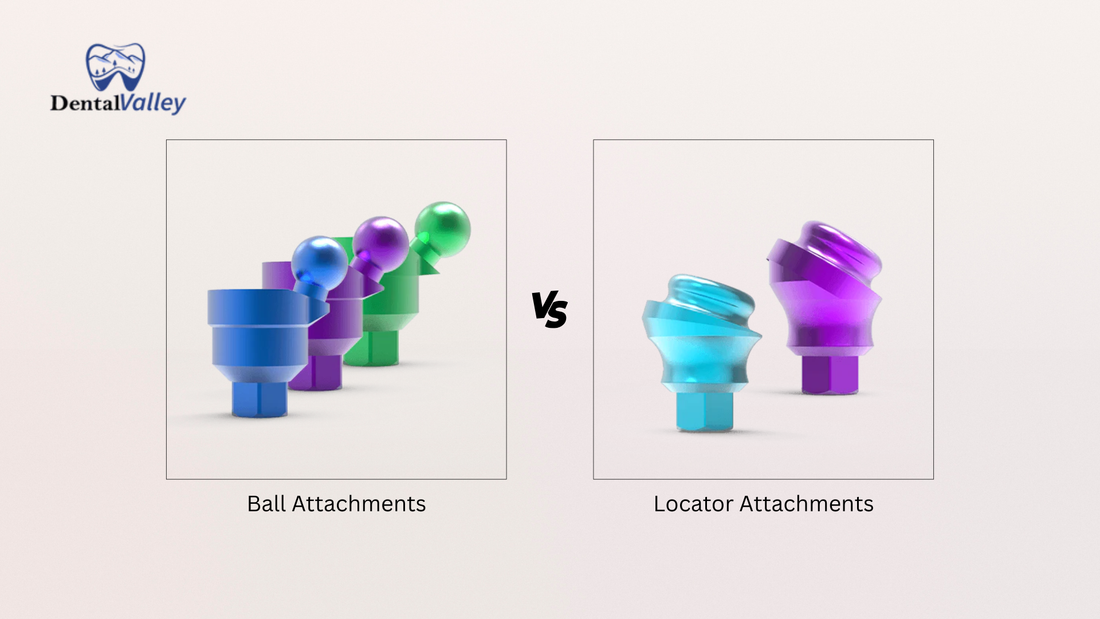
Ball Attachments vs Locator Attachments: Which Retention System Works Better?
To make an implant overdenture successful, retention is everything. Stability affects chewing efficiency, speech clarity, hygiene maintenance, and long-term patient satisfaction.
When choosing between dental ball attachments and locator systems, clinicians often ask a simple question: which retention system actually performs better in daily clinical practice?
The answer depends on case selection, implant positioning, restorative goals, and maintenance expectations.
This guide provides a detailed, practical comparison designed for those who want clarity before selecting a retention solution for their next dental implant case.
Understanding Overdenture Retention Systems
Implant overdentures rely on mechanical attachment systems to connect the prosthesis to the implants. Two of the most widely used systems are:
• Ball (O-ring) attachments
• Locator click-attachments
Both are compatible with multiple implant platforms and are used across partial and full-arch cases, including best full mouth dental implants restorations.
Before comparing them directly, let’s understand how each works.
What Are Ball Attachments?
Ball attachments consist of:
→ A ball-shaped male component attached to the implant
→ A rubber or nylon O-ring housed inside the denture
The prosthesis snaps over the ball head, creating retention through friction.
They are commonly referred to as dental implant ball attachments in restorative workflows and remain one of the most traditional overdenture retention systems.
Key Characteristics:
• Simple mechanical design
• Cost-effective solution
• Easy to repair and replace
• Suitable for parallel implants
Ball systems are often preferred in cases involving a narrow dental implant where space limitations restrict bulkier attachments.
What Are Locator Attachments?
Locator attachments use an abutment with replaceable nylon inserts that provide varying levels of retention.
They are widely known for:
• Self-aligning seating mechanism
• Dual retention design
• Reduced vertical height requirement
In complex cases with angulation challenges, locator systems offer improved flexibility and predictable seating.
Quick Comparison Table
|
Feature |
Ball Attachments |
Locator Attachments |
|
Profile Height |
Moderate |
Low profile |
|
Maintenance |
O-ring replacement |
Insert replacement |
|
Angulation Tolerance |
Limited |
Higher tolerance |
|
Cost |
Lower initial cost |
Slightly higher |
|
Chairside Adjustability |
Basic |
Customizable retention levels |
|
Ideal For |
Straight implants |
Divergent implants |
Retention Strength: Which Holds Better?

Locator systems generally provide more adjustable and consistent retention over time.
Ball attachments offer stable retention but depend heavily on implant parallelism. If implants are not aligned properly, retention may reduce.
Locator systems allow clinicians to select different nylon inserts depending on retention needs. This flexibility makes them suitable for:
• Geriatric patients needing moderate retention
• Patients with strong bite forces
• Cases involving best dental implants placed with slight angulation
Clinical Maintenance & Long-Term Performance
Maintenance plays a critical role in overdenture success.
Ball Attachments:
→ O-rings wear out over time
→ Replacement is inexpensive
→ Metal housing is durable
Locator Attachments:
→ Nylon inserts are replaceable
→ Retention levels can be upgraded
→ Housing wear is minimal
For a complete overview of supporting components required during restoration, check out our detailed guide showcasing a structured checklist of accessories you must have, to streamline workflows.
Cost Considerations
Many clinicians evaluating overdenture systems also assess dental implant cost factors.
Ball attachments:
→ Lower upfront cost
→ Fewer components
→ Simple lab procedures
Locator attachments:
→ Slightly higher component cost
→ More advanced engineering
→ Greater long-term flexibility
Prosthetic Versatility and Workflow Integration
Retention systems do not function independently. They interact with:
• Dental implant abutment components
• Bar systems
• Multi-unit restorations
For laboratory workflows, pairing overdenture attachments with a castable abutment ensures customization when needed.
In advanced cases, a prosthetic abutment may be used before selecting the retention mechanism.
Implant Compatibility & Connection Stability
Both systems are compatible with common internal hex platforms, including systems like alpha bio dfi implant designs and sla surface implant configurations.
Retention performance also depends on implant stability, especially when using a titanium screw implant.
Proper fixation requires:
• High-quality fixation screws dental components
• Durable titanium dental implant screw integrity
• Reliable sourcing from a trusted dental implant connection screw supplier
These elements influence long-term prosthetic retention more than the attachment design alone.
When to Choose Ball Attachments
Ball attachments may be ideal when:
1. Implants are parallel
2. Budget is a primary concern
3. Simplicity is preferred
4. Maintenance needs to remain low-cost
5. Treating straightforward overdenture cases
When to Choose Locator Attachments

Locator systems are better suited for:
1. Divergent implants
2. Limited vertical space
3. Custom retention levels
4. Long-term adjustability
5. Complex overdenture cases
FAQ Section
Q: Which attachment lasts longer?
A: Both can last years. Locator inserts may need replacement more often, but the metal components are highly durable.
Q: Are ball attachments cheaper?
A: Yes, ball attachments typically have a lower initial cost compared to locator systems.
Q: Do locator attachments require more maintenance?
A: They require periodic insert replacement, but this allows customizable retention over time.
Q: Can both systems be used for full mouth restorations?
A: Yes, both systems are suitable for full arch overdentures when properly planned.
Q: Which is better for angled implants?
A: Locator systems generally perform better with implant angulation.
Final Verdict: Which Retention System Works Better?
There is no universal winner. The right choice depends on clinical conditions, budget considerations, implant angulation, and long-term maintenance planning.
Ball attachments provide simplicity and cost-effectiveness. Locator systems offer flexibility and precision.
Both systems perform reliably when integrated into a properly planned implant restoration using quality components and stable surgical protocols.
Conclusion: Making the Right Choice for Long-Term Success
Retention systems define how an overdenture performs every day; during chewing, speaking, and routine cleaning.
Choosing between ball and locator attachments should never be based on trend alone. It should be guided by biomechanics, implant positioning, patient expectations, and maintenance strategy.
Reviewing structured solutions and compatible attachment options through platforms like Dental Valley can support informed decisions without overcomplicating workflows.
In the end, success comes from selecting the system that fits the case, not forcing the case to fit the system.
Thoughtful planning, reliable components, and patient-centered execution always lead to better outcomes.ac


Comments
Post a Comment